Docs / the record
How it works.
How to check it.
What a mint costs. Where the money goes. What a drawing can prove.
This site is a preview. No token or collectible is issued here. The mechanics below describe the launch plan. Bids and distributions are not live on this site.
How minting works
A mint costs 0.2 SOL + 1,000,000 FLYWHL tokens. There is no separate balance you must hold to qualify — the tokens are the charge, not a gate.
- The SOL goes 100% to the fly and funds its bid pool. None of it reaches the operator.
- The full 1,000,000 tokens transfer to the fly in one payment. The token’s 3% transfer fee withholds 30,000 on the way, so the fly receives 970,000. It then burns 500,000 and keeps 470,000. The fee comes out of the mint cost, not on top of it.
- One piece per wallet, enforced on chain.
- Which piece you get is random.
The token charge is a fixed count; what those tokens are worth on the market is not.
The 5% secondary royalty
The collection’s secondary royalty is 5%, and 100% of it goes to the operator. The fly earns no royalties. Because no mint proceeds reach the operator, this royalty is their only revenue.
The royalty is written into the NFT metadata and shown by marketplaces. That disclosure is not proof that any particular sale actually paid it.
The floor
The fly uses its SOL to place buy-only bids on pieces, at 75–80% of the mint price while a drop is open.
A bid at or above mint price would let someone mint, sell straight to the fly, and repeat — minting would fund the very pool being drained. Bidding below mint price breaks that loop.
After a drop closes, no new piece can be minted at that price, and bids can rise with income against the market floor. A bid still needs funds behind it; this policy is not a guaranteed sale price.
Burn and capacity
The fly buys pieces and later burns them to retire them. Retiring a piece adds capacity to the next drop — never an instant mint slot.
An instant replacement slot would keep minting permanently open, so buyers could always mint instead of paying more on the secondary market, capping it at mint price.
GOOGLX distribution
GOOGLX reaches two groups: token holders earn it from the transfer fee, and piece holders earn it from the fly in proportion to their eligible pieces.
The fly’s distribution is threshold-triggered, never scheduled. Its own pieces are excluded from the snapshot, so it cannot pay itself while it waits to retire them.
A holder with no GOOGLX token account cannot be paid. They are carried to the next distribution, not skipped.
The trigger amount is not yet set. There is no promised payout date or published yield; income depends on trading volume.
Provenance
Each piece is drawn in advance, and its provenance lets anyone reproduce the exact original file. The test is byte-identical output, not a drawing that merely looks similar.
The art, metadata, drawing path and provenance record live permanently on Arweave, not on this website. If this site disappeared, the tokens would be unaffected.
What the record needs
A piece’s record pins its seed; the scenario and stimulus trace behind its name; the simulation parameters and unchanged connectome; the number of windows run (700 for new drawings; the linked preview used 260, an earlier study); a hash of the readout code; and the SHA-256 of the original image, the value a regenerated file must match.
To verify, rerun from that record with the recorded settings in a matching environment, then check that your output’s SHA-256 equals the recorded image hash. A mismatch fails, even if the pictures look alike.
Not yet published: this preview does not include the full simulation record, a pinned reproduction environment or a regeneration command, so end-to-end regeneration cannot yet be checked from this site. That remains a launch requirement.
What you can check now
Download the preview drawing record and its original PNG, then hash the PNG:
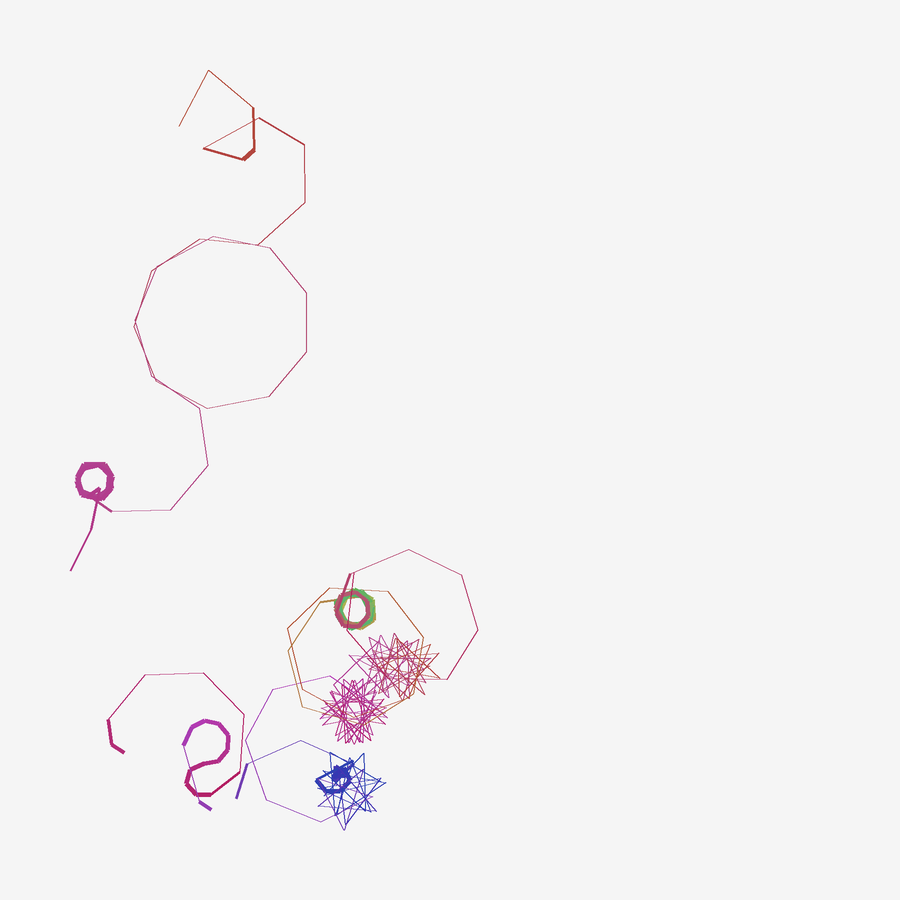
shasum -a 256 named-mixed-1003.pngCompare the result with imageSha256 in the record. This proves the image matches the record; it does not prove the simulation generated it. The browser’s animation shows the recorded drawing path and is an approximation — the original PNG is the file being checked.
New drops use randomised scenarios and seeds. Categories describe measured events, not an invented rare/common ladder. Counts are reported only after a drop is frozen; no odds are advertised before minting.
Addresses of record
These are the public wallets and accounts of record. They are not mint destinations or proof that the collection is live, and this page does not report their balances.
- The fly’s wallet
AXXSQd5uyjwppWnFhbJdAspmYTBcbGLFeJaxxgLBWwd4Inspect the fly’s wallet on Solana Explorer- Operator payout wallet
Dye1b54z2tXqyJ6gcEuh543sTssxhu1rDyw9ehRRUmccInspect the operator wallet on Solana Explorer- FLYWHL token mint
- Not deployed — mainnet address pending.
- NFT collection
- Not deployed — mainnet address pending.
- Candy Machine and guards
- Not deployed — mainnet addresses pending.
- The fly’s bid pool
- Not deployed — mainnet address pending.
Once published, these accounts will let anyone inspect token transfers and burns, mint settings, royalty metadata and funded bids. Placeholder labels are not addresses.
What we do not claim
- The fly does not provide liquidity to GOOGLX. It is a one-way accumulator: it receives GOOGLX and distributes it, but never buys or swaps it.
- No yield figure is published until there is trading volume to quote. Distributions and floor support do not guarantee value.
- Pieces are pre-drawn. The reveal shows a recorded drawing path; nothing is simulated live when you mint.
- A piece’s page stays unlisted until its owner opens it, but its metadata is publicly readable on chain from the moment it is revealed. That is presentation order, not secrecy.
- Colour is our choice: hue tracks which sense dominated and saturation how strongly, both from the fly’s activity, while the palette rotation is applied per piece from the seed — like a printmaker choosing inks.